


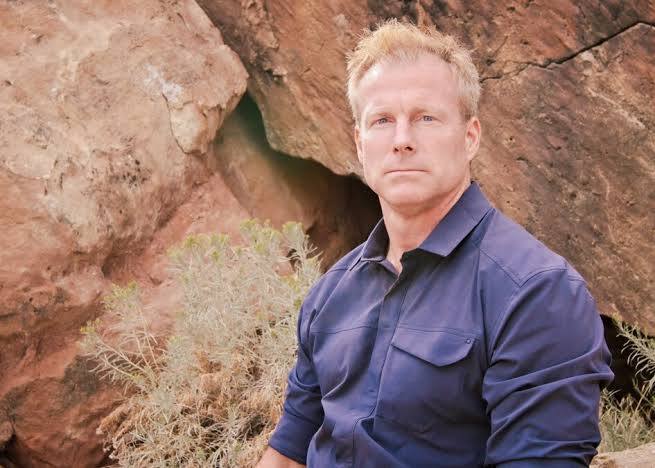
Travis Taylor is an American aerospace engineer, scientist, author, and television personality whose career combines advanced engineering, scientific research, defense technology, and a fascination with unexplained phenomena. He has become particularly recognizable through The Secret of Skinwalker Ranch, where he appears as one of the principal scientific investigators examining unusual reports at the Utah property.
Long before television made him familiar to a wider audience, Taylor had already developed an extensive technical background. His education includes multiple advanced degrees in fields ranging from physics and optical science to aerospace engineering and astronomy. His professional work has also included projects connected with NASA and the U.S. Department of Defense.
His unusual combination of scientific credentials, writing, television work, and interest in unexplained phenomena has made his career particularly distinctive.
Who Is Travis Taylor?
Travis Shane Taylor was born on July 24, 1968, in Decatur, Alabama. According to the Encyclopedia of Alabama, he grew up in North Alabama and developed an interest in science and engineering at an early age. His father worked as a machinist at Wyle Laboratories, a company that worked on NASA-related projects during the space program.
Taylor’s childhood interests reportedly included science fiction, electronics, and engineering. As a teenager, he built a radio telescope with assistance from a neighbor. The project won the Alabama state science fair and placed sixth nationally, an early achievement that reflected his enthusiasm for technical experimentation.
That early curiosity eventually developed into a professional career in engineering and scientific research.
Education and Academic Background
One of the most notable aspects of Taylor’s biography is the breadth of his education.
He earned a bachelor’s degree in electrical engineering from Auburn University in 1991. He later studied at the University of Alabama in Huntsville, earning advanced degrees in physics, optical science and engineering, and mechanical and aerospace engineering. He also earned a master’s degree in astronomy from the University of Western Sydney and another doctorate in aerospace engineering.
This multidisciplinary education has allowed Taylor to work across several technical fields rather than concentrating exclusively on one area of science.
His background in optical science, physics, astronomy, electrical engineering, and aerospace systems has become an important part of his public identity.
Career With NASA and the Department of Defense
Before becoming widely known through television, Taylor spent many years working on advanced technology programs.
The History Channel describes him as an engineer and best-selling author who has worked on high-technology programs associated with the Department of Defense and NASA for approximately 25 years.
His professional background has included research involving advanced propulsion concepts, space telescopes, directed-energy systems, high-energy lasers, and future space-launch technologies. Some of his work has involved government programs that are not publicly detailed, meaning that a complete picture of his professional activities is not necessarily available.
This technical experience later became particularly relevant to his television work, where he frequently approaches unusual claims through measurements, instrumentation, and experimentation.
Career as an Author
Engineering is only one part of Taylor’s professional life.
He is also a prolific writer who has published science fiction and nonfiction books. The Encyclopedia of Alabama notes that he has authored more than 20 books, including numerous science fiction titles and nonfiction works.
His fiction reflects another side of his personality: an interest in space exploration, futuristic technology, military science, and the possibilities of advanced engineering.
Writing has allowed Taylor to explore concepts that may be difficult to communicate through conventional technical work. His books also demonstrate how closely science and imaginative storytelling have been connected throughout his career.
Television Career
Taylor’s television career introduced him to a much larger audience.
He first became widely recognizable through Rocket City Rednecks, a National Geographic series that aired from 2011 to 2013. The program combined science experiments with Taylor’s family and friends in Alabama, presenting technical concepts in an entertaining format.
The show helped establish his reputation as someone capable of discussing complicated scientific subjects in a relaxed and accessible way.
He later appeared in documentary programming focused on unexplained phenomena and space-related subjects.
The Secret of Skinwalker Ranch
For many modern viewers, Taylor is best known for The Secret of Skinwalker Ranch.
The History Channel identifies him as an engineer and author who became part of the investigative team examining reports of unusual activity at Skinwalker Ranch. His role involves applying scientific and engineering techniques to experiments conducted at the property.
The program focuses on reported phenomena including unusual aerial observations, electromagnetic effects, radiation readings, equipment problems, and other unexplained events. Taylor and the rest of the team use various instruments and experiments while attempting to determine whether the reported anomalies have conventional explanations.
The show has attracted a substantial audience, although its interpretations and scientific methodology have also been debated by critics. It is important to distinguish between phenomena being investigated on television and independently established scientific conclusions.
Approach to Unexplained Phenomena
Taylor’s interest in unexplained phenomena goes back well before his television career.
His scientific background makes his participation in paranormal and UAP investigations particularly interesting because he approaches these subjects from an engineering perspective.
Rather than simply describing unusual events, the investigations featured on television frequently attempt to measure them using cameras, sensors, radar, radiation detectors, drones, and other equipment.
However, an unusual measurement does not automatically establish an extraterrestrial or paranormal explanation. Determining the cause of an unexplained observation requires repeatable evidence, controlled testing, and independent verification.
That distinction is important when discussing Taylor’s work and the claims presented on television.
UAP Research and Public Interest
Taylor has also become associated with discussions surrounding unidentified anomalous phenomena, commonly known as UAPs.
His background in aerospace engineering and advanced technology makes him a natural participant in conversations about unidentified objects and unusual aerial observations.
Public interest in UAPs has increased significantly in recent years, particularly following official government discussions and reports. Taylor’s television appearances have helped introduce these subjects to audiences who may not otherwise follow aerospace research.
His involvement has also contributed to debates about where legitimate scientific investigation ends and speculation begins.
Personality and Public Image
Taylor’s personality is another reason he has become popular with viewers.
Unlike the stereotypical image of a scientist working quietly in a laboratory, he combines technical expertise with enthusiasm, humor, television experience, and a visible sense of curiosity.
His communication style makes complex topics more approachable for general audiences.
At the same time, his public profile means that his statements and interpretations receive considerable scrutiny, particularly when discussing subjects for which definitive scientific evidence remains limited.
Achievements and Professional Legacy
Taylor’s achievements extend across several areas.
His academic accomplishments demonstrate a long-term commitment to technical education. His work with NASA and defense-related programs reflects experience in advanced engineering and scientific research. His books demonstrate a sustained interest in both science and speculative technology, while his television career has introduced his work to millions of viewers.
Perhaps his most distinctive achievement is the ability to connect these different worlds.
He has worked as an engineer, researcher, author, science communicator, and television personality without being confined to a single professional identity.
Frequently Asked Questions
Who is Travis Taylor?
Travis Taylor is an American aerospace engineer, scientist, author, and television personality known for his technical work and appearances on programs including Rocket City Rednecks and The Secret of Skinwalker Ranch.
What is Travis Taylor known for?
He is particularly known for his aerospace and scientific background, his work on advanced technology programs, his books, and his role on The Secret of Skinwalker Ranch.
Where was Travis Taylor born?
Travis Taylor was born in Decatur, Alabama, on July 24, 1968.
What does Travis Taylor do?
His professional background includes aerospace engineering, scientific research, writing, and television work.
Is Travis Taylor an aerospace engineer?
Yes. The History Channel identifies him as an aerospace engineer and author, while his academic background includes advanced degrees in aerospace engineering and related scientific disciplines.
What TV show made Travis Taylor famous?
He became known to television audiences through Rocket City Rednecks and later gained wider recognition as a principal investigator on The Secret of Skinwalker Ranch.
Conclusion
Travis Taylor has built an unusually diverse career that brings together aerospace engineering, scientific research, writing, television, and the investigation of unexplained phenomena.
From his early fascination with electronics and astronomy to his advanced academic training and professional work involving NASA and defense technology, his career has been shaped by a persistent curiosity about how the world works. His later success on television has given him a platform to share that curiosity with a much broader audience.
