


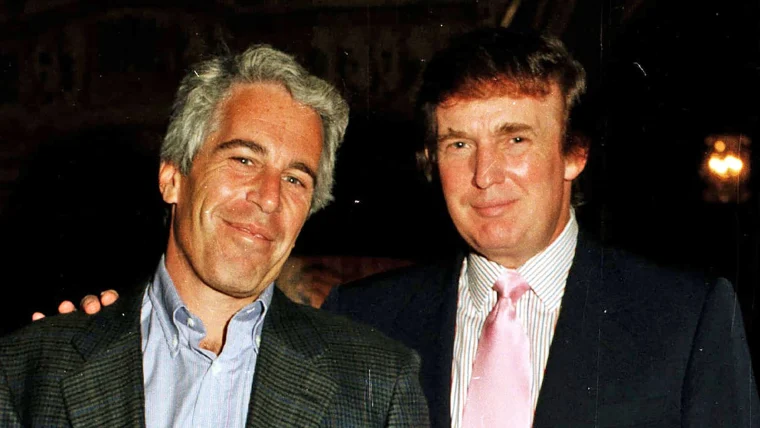
The subject of Trump Epstein continues to generate intense public interest because Donald Trump and Jeffrey Epstein were part of overlapping social circles decades before Epstein was federally charged with sex trafficking. Public records, photographs, flight logs, court materials, and later document releases have established that the two men knew each other and socialized during the 1990s and early 2000s. At the same time, many claims circulating online go beyond what the available evidence actually establishes.
The issue has received renewed attention following the large-scale release of Epstein-related records by the U.S. Department of Justice. The department said in January 2026 that it had published more than 3 million additional pages, along with thousands of videos and hundreds of thousands of images, under the Epstein Files Transparency Act. The DOJ also warned that the production could contain material submitted by members of the public that was false or unverified.
Trump and Epstein’s Social Connection
Donald Trump and Jeffrey Epstein were acquainted for years before Epstein became publicly associated with criminal investigations.
Photographs and contemporary reporting document the two men attending social events in the 1990s. Trump and Epstein were also seen together at Mar-a-Lago and at events involving models and celebrities.
Trump publicly described Epstein positively in a 2002 interview with New York Magazine, although their relationship later ended.
This historical association is not disputed. The important question is what conclusions can reasonably be drawn from it.
A social relationship or appearance in photographs does not, by itself, establish participation in criminal activity.
What the Flight Records Show
Flight logs have been an important part of the public discussion.
Previously released records show that Trump flew on Epstein’s private aircraft on multiple occasions during the 1990s, with documented trips between locations including Florida and New York. Fact-checking organizations have reported that the flights did not establish that Trump traveled to Epstein’s private island.
This distinction matters because social media posts have repeatedly claimed that Trump visited Epstein’s private island, Little St. James.
Available public records reviewed by fact-checkers have not established such a visit.
Therefore, the statement that Trump had a documented social and travel connection with Epstein is supported by evidence, while the claim that he visited Epstein’s island is not established by the available flight records.
The Mar-a-Lago Connection
Another important part of the story involves Mar-a-Lago, Trump’s Florida club and residence.
Trump has said publicly that Epstein was eventually excluded from Mar-a-Lago. Trump has also acknowledged that Epstein hired women who had worked at the club’s spa and said he objected to Epstein recruiting staff members.
One of the women associated with the Epstein case, Virginia Giuffre, said that she was approached by Ghislaine Maxwell while working at Mar-a-Lago when she was 16.
These facts have fueled questions about what Trump knew and when he knew it.
However, the evidence must be carefully distinguished. Fact-checking of claims made about the released documents has found that some statements suggesting the records prove Trump knew about Epstein’s abuse go beyond what those documents establish.
The Dispute Over What Trump Knew
One of the most contested issues is whether Trump knew about Epstein’s sexual abuse or recruitment of underage girls.
The released records contain statements and correspondence involving Epstein in which he claimed or suggested that Trump knew about certain activities.
But a statement made by Epstein is not automatically independent proof that the statement was true.
FactCheck.org noted that some congressional claims about the documents overstated what the evidence established. In particular, documents cited in public debates did not independently prove that Trump knew that Maxwell was recruiting and grooming underage girls.
That distinction is crucial.
A document can establish that a person made an allegation. It does not necessarily establish that the allegation itself is true.
What Trump Has Said
Trump has repeatedly said that he eventually had a falling-out with Epstein and that he was not involved in Epstein’s crimes.
He has also denied visiting Epstein’s private island.
In public comments, Trump has said that Epstein was no longer welcome at Mar-a-Lago and that he objected to Epstein taking employees from the club.
Those statements have been scrutinized because the released records contain additional references to the relationship.
The existence of conflicting claims does not automatically determine which interpretation is correct. It means that the historical record requires careful examination.
The 2026 Epstein File Releases
The issue changed significantly when the Department of Justice began releasing large quantities of Epstein-related records.
In January 2026, the DOJ announced that it had published more than 3 million additional pages, bringing its total production to nearly 3.5 million pages. The material included documents from federal investigations, criminal cases, and other sources.
The DOJ also emphasized that not every item in the production should be treated as verified fact. According to the department, material submitted to investigators by members of the public could include false or fabricated claims.
That warning is particularly significant when evaluating politically sensitive material involving Trump.
A name appearing in a document does not necessarily mean investigators determined that the associated claim was credible.
Why the Files Are Difficult to Interpret
The Epstein records are enormous and contain many different kinds of material.
Some documents are official investigative records. Others are correspondence, tips, interview summaries, photographs, travel records, court materials, or submissions from outside individuals.
They therefore have different evidentiary value.
A verified flight log is different from an unverified email claim.
A sworn court filing is different from an anonymous allegation.
An investigator’s note is different from a newspaper rumor.
Treating every document as equally reliable creates a misleading picture.
What Remains Unclear
Several important questions remain subjects of public debate.
One is the precise nature and timing of the break between Trump and Epstein.
Another concerns the extent of their social relationship during the years when Epstein was moving among wealthy and influential circles.
Questions also remain about which information in the enormous file collection is corroborated independently and which material represents unverified claims submitted to investigators.
The Department of Justice has said its Epstein Library may be updated if additional documents are identified for release. As of July 17, 2026, the department’s online library remained active and warned that some materials could contain sensitive or improperly disclosed information.
That means the public record may continue to develop.
What Is Established Versus Unproven
A careful summary is possible.
It is established that Trump and Epstein knew each other and socialized.
It is established that Trump flew on Epstein’s private aircraft on several occasions during the 1990s.
It is established that Epstein had connections to people who worked at Mar-a-Lago and that Giuffre said Maxwell approached her there.
It is not established by the available flight records that Trump visited Epstein’s private island.
It is also not appropriate to treat every allegation contained in released files as independently verified fact.
The distinction between association and criminal conduct is fundamental.
Why This Distinction Matters
The Epstein scandal involves serious crimes against minors and adults, and the victims deserve accurate reporting.
At the same time, political disagreements can encourage people to interpret every document in the direction of their preferred conclusion.
A credible account should resist that pressure.
When discussing Trump and Epstein, readers should ask three questions:
What does the document actually say?
Who made the claim?
Is there independent evidence supporting it?
These questions can help separate evidence from inference.
The Broader Political Impact
The Epstein files have become a major political issue because they involve wealthy and influential people from different parts of American public life.
The controversy has also placed pressure on government agencies to explain how records were reviewed, redacted, released, or withheld.
In 2026, disputes over the handling of Epstein records continued. New Mexico, for example, filed a lawsuit seeking additional federal records connected to Epstein, arguing that access to some materials remained incomplete.
This demonstrates that the broader controversy extends beyond Trump and involves questions about transparency, investigative records, victim privacy, and government accountability.
Frequently Asked Questions
Did Donald Trump know Jeffrey Epstein?
Yes. Public records establish that Trump knew Epstein and socialized with him during the 1990s and afterward.
Did Trump fly on Epstein’s plane?
Yes. Publicly available flight records document multiple trips involving Trump on Epstein’s aircraft during the 1990s.
Did Trump visit Epstein’s private island?
There is no documented evidence establishing that Trump visited Epstein’s private island, according to fact-checking reviews of the available records.
Did the Epstein files prove that Trump participated in Epstein’s crimes?
The released material has generated allegations and renewed scrutiny, but the existence of a person’s name or an allegation in the files is not, by itself, proof of criminal conduct.
Are all Epstein documents verified?
No. The Justice Department has specifically warned that its production may contain material submitted by members of the public that is false or unverified.
Conclusion
The Trump Epstein story is a complicated part of the broader Jeffrey Epstein case, combining documented social connections, flight records, allegations, political disputes, and an enormous collection of newly released government documents.
The public record clearly establishes that Donald Trump and Jeffrey Epstein knew each other and moved within some of the same social circles. Flight logs also document multiple trips by Trump on Epstein’s aircraft during the 1990s. At the same time, claims about Epstein’s private island, Trump’s knowledge of criminal activity, or other allegations must be evaluated individually rather than treated as proven simply because they appear online or in a released document.
