


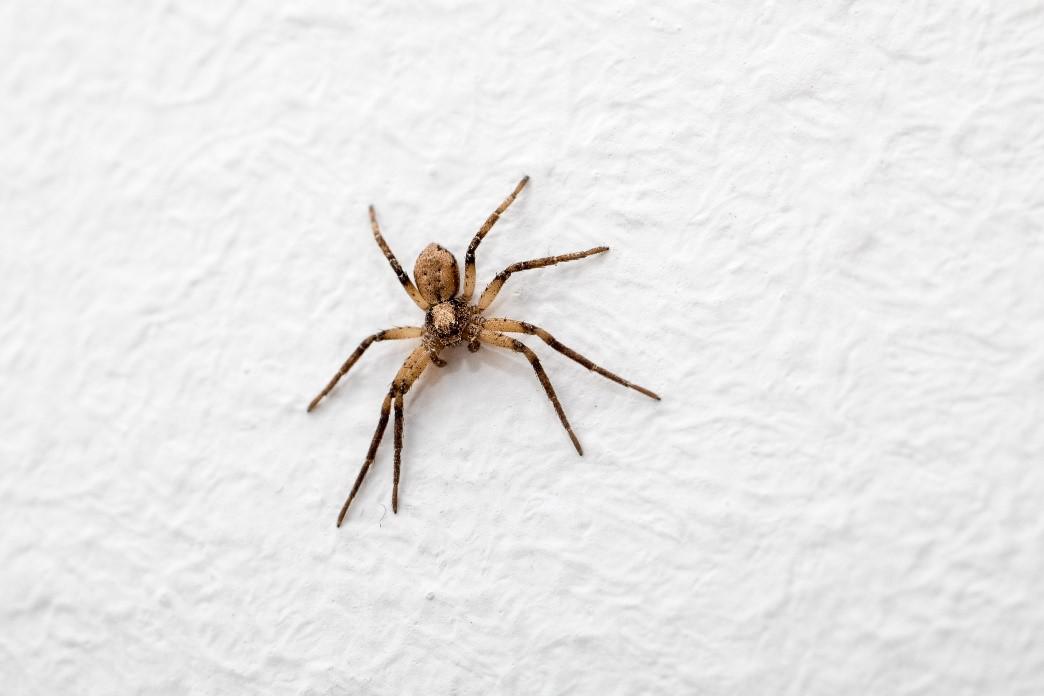
The common house spider is one of the most familiar spiders found around homes, garages, sheds, basements, and other sheltered spaces. Although many people are uncomfortable when they discover a spider indoors, these small arachnids are usually more interested in catching insects than interacting with humans.
House spiders are especially good at living around buildings because homes provide the conditions they need: shelter, quiet corners, suitable temperatures, and access to small insects. Their webs may appear in windows, wall corners, ceilings, garages, or other areas where insects are likely to pass.
Understanding what a common house spider looks like, where it lives, what it eats, and why it enters homes can make an unexpected encounter much less alarming.
What Is a Common House Spider?
The name common house spider is often used for small spiders that regularly live in and around buildings. In North America, the term commonly refers to Parasteatoda tepidariorum, although people may use the same everyday name for several different indoor spider species.
These spiders belong to the family Theridiidae, which includes cobweb spiders.
Unlike spiders that actively roam around hunting, common house spiders often create irregular webs and wait for prey to become trapped.
Their lifestyle is generally quiet and unobtrusive, which is why a spider may remain in one corner for a long period without being noticed.
What Does a Common House Spider Look Like?
A common house spider is usually small, with a rounded or slightly elongated abdomen and relatively slender legs.
The exact color can vary, but the body may appear brown, gray, tan, yellowish, or a combination of several shades. Some individuals have darker markings that create a mottled or patterned appearance.
Females are generally larger than males, and mature females are the ones people are most likely to notice because they remain near established webs.
Because their appearance can vary with age, sex, lighting, and species, identifying a spider from a quick glance alone can be difficult.
How Large Is a Common House Spider?
Common house spiders are generally small compared with many outdoor spider species.
Their body length may measure only a few millimeters, while the legs make the spider appear somewhat larger.
Size can vary considerably, especially between males and females.
A spider that appears unusually large may also belong to a different species that has wandered indoors.
This is one reason accurate identification should rely on several characteristics rather than size alone.
Where Do Common House Spiders Live?
These spiders prefer places where they can build webs without frequent disturbance.
Typical locations include:
Window frames
Garage corners
Basements
Attics
Ceiling corners
Behind furniture
Sheds
Porches
Storage areas
Outdoor structures
They may also build webs in less obvious spaces such as around pipes, beneath shelves, behind doors, or between objects that are rarely moved.
A spider’s choice of location is usually practical. It is looking for shelter and a good position for catching insects.
Why Do Common House Spiders Enter Homes?
The simple answer is that homes provide favorable living conditions.
A building can offer warmth during colder periods, protection from weather, and plenty of small insects.
Spiders may enter through small gaps around doors, windows, vents, pipes, or other openings.
Some may also be brought indoors accidentally on firewood, boxes, plants, outdoor furniture, or stored materials.
Once inside, a spider may settle in a quiet location where it can build a web.
This does not necessarily mean that a home is dirty or poorly maintained.
Spiders can appear in very clean houses because they are following environmental conditions rather than household cleanliness.
What Do Common House Spiders Eat?
Common house spiders primarily feed on small insects and other tiny arthropods.
Their prey may include flies, mosquitoes, moths, ants, small beetles, and other insects that become trapped in their webs.
This can make them beneficial in some situations.
A spider living quietly in a corner may be reducing the number of insects in that area.
However, not everyone wants spiders inside the house, especially when there are many webs or when residents are uncomfortable around them.
How Do Their Webs Work?
Common house spiders are known for building irregular cobweb-like structures.
These webs are not always the neat, circular patterns associated with orb-weaving spiders.
Instead, they can look messy or loosely organized, with multiple strands extending between surfaces.
The spider generally waits in or near the web for an insect to become trapped.
When vibrations indicate that prey has been caught, the spider moves toward it and begins the feeding process.
Old webs may collect dust, making them easier to notice than the spider itself.
Are Common House Spiders Dangerous?
For most people, common house spiders are not considered dangerous.
They generally avoid humans and are much more interested in insects than in biting or confronting people.
Like many spiders, they may bite in rare circumstances if they are trapped against the skin or handled.
A spider bite can be difficult to identify visually, and not every skin irritation associated with a spider sighting is actually caused by a spider.
If a bite or suspected bite causes severe pain, significant swelling, breathing problems, widespread symptoms, or other concerning reactions, professional medical attention is appropriate.
Do Common House Spiders Bite People?
Bites are uncommon.
Most common house spiders have little reason to approach people, and their small size makes human interaction unnecessary from their perspective.
If a spider is discovered, it will usually try to remain hidden or escape rather than become aggressive.
Handling spiders increases the chance of accidental contact, so it is better to avoid picking them up directly.
Common House Spider Versus More Concerning Species
Not every spider found indoors is a common house spider.
Some species that enter buildings can be more medically significant than others.
For example, widow spiders and recluse spiders are different from ordinary house spiders and require more careful identification.
One important problem is that online photos can lead people to misidentify harmless spiders as dangerous species or vice versa.
Color alone is not always enough for a reliable identification.
When an unfamiliar spider seems unusual or potentially medically significant, a local pest professional or qualified identification service can provide more reliable assistance.
Why You May Suddenly See More Spiders
It can be surprising to notice several spiders around a home at once.
One explanation is increased insect activity.
If insects become more abundant because of weather, lighting, moisture, food sources, or seasonal conditions, spiders may have more opportunities to feed.
Seasonal changes can also affect spider movement.
Some spiders become more visible when they mature, reproduce, search for mates, or move between sheltered locations.
A sudden increase in sightings does not automatically indicate a major infestation.
How to Reduce Spiders Indoors
If you prefer to keep spiders outside, prevention is often more effective than repeatedly removing individual spiders.
Start by reducing easy entry points.
Check window screens, door frames, vents, cracks, and gaps around pipes.
Outdoor lighting can also attract flying insects, which may indirectly attract spiders. Where practical, reducing unnecessary exterior lighting can help reduce the insect activity that supports spider populations.
Regularly removing webs from corners, garages, and other sheltered locations can also make those spaces less attractive.
Keeping storage areas organized may reduce the number of undisturbed places where spiders can settle.
Should You Remove a Common House Spider?
There is no universal answer.
Some homeowners prefer to leave harmless spiders alone because they consume insects.
Others would rather remove them because of fear, allergies, children, pets, or general discomfort.
If there is only one spider, gently relocating it can be an option.
A container and stiff piece of paper can be used to trap the spider without directly touching it. It can then be released outside in a sheltered location.
For people who are uncomfortable handling spiders, professional pest control may be a better choice.
Common Mistakes When Dealing With Spiders
One common mistake is immediately assuming that every spider is dangerous.
Another is using excessive pesticide indoors when a simple removal or exclusion measure would be enough.
People may also ignore the source of the problem.
If a home repeatedly has many spiders, it is worth investigating why.
There may be numerous insects, moisture problems, exterior lighting, vegetation close to the building, or entry gaps that provide favorable conditions.
Addressing those factors can be more effective than removing spiders one by one.
The Role of Spiders in the Home Environment
Although spiders can be unwelcome indoors, they are part of the natural food web.
They prey on insects and can help regulate populations of small household pests.
This does not mean every spider should remain indoors.
Instead, it highlights why a single harmless spider does not necessarily require an emergency response.
Understanding what the animal is doing can help homeowners decide whether simple relocation, prevention, or professional treatment makes the most sense.
Frequently Asked Questions
What is a common house spider?
A common house spider is a small spider associated with human buildings. In North America, the name commonly refers to Parasteatoda tepidariorum, although everyday naming can vary.
Are common house spiders dangerous?
They are generally considered harmless to people and usually avoid human contact.
Why do common house spiders come inside?
They enter homes seeking shelter, suitable temperatures, and access to insects that can serve as food.
What do common house spiders eat?
They commonly feed on small insects and other tiny arthropods caught in their webs.
How can I keep common house spiders out of my home?
Sealing gaps, repairing screens, reducing insect activity, removing webs, and keeping storage areas organized can help reduce indoor spider activity.
Should I kill a common house spider?
You do not necessarily need to. A harmless spider can often be left alone or gently relocated outdoors, depending on your preferences and circumstances.
How can I identify a common house spider?
Look at its body shape, markings, web type, size, and location. Because several spider species can look similar, professional identification may be necessary when the distinction matters.
Conclusion
The common house spider may be an unwelcome sight for some homeowners, but it is generally a small, quiet predator that spends its time catching insects rather than seeking contact with people.
These spiders enter homes because buildings offer shelter, favorable temperatures, and food. Their irregular webs are often built in quiet corners, window frames, garages, basements, and other areas where insects are likely to pass.
For most households, a single common house spider is not a serious concern. Simple measures such as sealing gaps, repairing screens, reducing insect activity, and removing webs can help prevent repeated sightings.
The most important step is accurate identification. Not every indoor spider belongs to the same species, and appearance alone can sometimes be misleading. When a spider seems unusual or there is a genuine concern about possible medical risk, professional identification is the safest approach.
